Fresh Red Chillies Chutney

Fresh Red Chillies Chutney

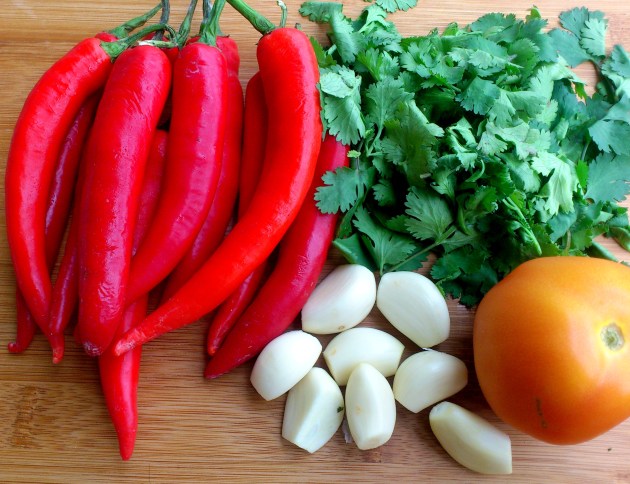
A very simple yet very tangy chutney which surely adds zing to any meal. Fresh red chillies are deseeded and ground with garlic and spices. I tasted this chutney for the first time in Mangalore at my sister-in-law’s place. Her mom is an expert cook and she serves variety of such yummy side dishes and snacks with every meal. I made some very simple modifications to the original recipe. I roasted the chillies, tomato, and garlic to add the smokey flavor and it just works wonders.

You can make this without the tomato too. Tomato adds body to the chutney. You can adjust the lime and sugar as per taste but I would suggest not leaving out the sugar. Sugar balances the spice and sour elements and gives this chutney the tangy taste. This chutney can be served as a side dish with any meals or even as a dip with nachos, crisps, or simple vegetable crudités.

Fresh Red Chillies Chutney

Ingredients

Makes 2/3 cup

  • 10 fresh red chillies
  • 8 -9 garlic cloves
  • 1 tomato
  • 3 tsp lime juice
  • ½ tsp sugar
  • ¼ cup chopped coriander
  • Salt to taste

Recipe

Wash and pat dry the chillies and tomato. Grill/roast the chillies, tomato, and garlic on open flame turning every few minutes till the skin looks charred. Remove from fire and cover them immediately. Once the chillies, garlic, and tomato are cooled. Peel the skin and chop them roughly. Remember to de-seed the chillies.

Grind the chillies, garlic, tomato, lime juice, sugar, and salt to a very coarse paste. Add the chopped coriander and grind again to a coarse paste. Store covered in fridge. This chutney can be served as a dip with snacks or as a side dish with any meals.

Rajasthani Saag Rotla

Rajasthani Saag Rotla

Rajasthan’s cuisine is as rich, colourful, and royal as the place itself. One of my sisters in law is from Jaipur and she introduced me to this winter dish called Saag rotla. It is a cauliflower and peas curry cooked in pure ghee and orange juice. It is served with thick rotis (called rotla) made of whole wheat, ghee, and milk. If you feel like indulging, you can try this dish. This dish is perfect for a lazy weekend afternoon. I surely feel sleepy after eating this.

I am not a cauliflower lover. But after tasting this dish, I have made an exception. Since this curry does not use any water, you need to cut the cauliflower very finely (it should look almost finely grated) so that it can be cooked quickly.

The essence of this curry lies in the slow cooking of vegetables in spices and orange juice. You can add as much spices and ghee as you can tolerate. I have not tried cooking it in oil yet. Cook it on the lowest flame throughout and keep mixing in between. If you feel that the curry might burn add little more orange juice but no water.

The rotla that accompanies this dish has ghee too. Knead the dough for rotla with only milk. No water again. Roll out the rotla thick and small. Cooking it on a clay tava will add to the taste. But fret not if you do not have a clay griddle. Cook it on a low gas on normal griddle and then cook both sides on open flame like normal phulka is made. Again with the ghee, drizzle as much as you can tolerate. Serve this with fresh cut onions and green chillies.

Rajasthani Saag Rotla

Ingredients

For Rotla

  • 1 ½ cup whole wheat flour
  • 1 tsp carom seeds (ajwain)
  • 1 tbsp ghee (you can double the amount of ghee if you want softer rotis)
  • Milk to knead the dough (appx ½ cup is sufficient)
  • Salt to taste

For Saag

  • 4 tbsp ghee
  • 7-8 cloves of garlic
  • 3 tbsp chopped ginger
  • 4 green chillies
  • 1 onion finely chopped
  • 1 cup peas (If you are using frozen peas, thaw them in advance)
  • 2 cups finely chopped cauliflower
  • 2 tsp red chilli powder (you can increase this if you like the curry spicier)
  • 1 tsp garam masala
  • ¼ tsp turmeric powder
  • ½ cup freshly squeezed orange juice

Recipe

For the rotla

Mix all the ingredients for rotla and knead a firm dough. Cover and keep aside for 15-20 minutes.

Divide the dough into 10 portions. Roll out each portion into small and thick rotis and cook on a hot griddle just like phulkas. Drizzle each rotla with around 1 tsp or more of ghee.

For Saag

Grind the ginger, garlic, and green chilly to fine paste. You can add 1 tbsp water if required. Heat ghee in a thick bottomed pan. Add the ginger, garlic, and green chilli paste. Cook on slow flame for 3-5 minutes mixing in between. Add the onions and sauté. Cook till onions start browning. Add the peas, cauliflower, salt, red chilli powder, garam masala, and turmeric. Mix well.

Add the orange juice and cover cook on slow flame for 3-5 minutes. Remove the cover and cook till the cauliflower is cooked and you see ghee on top. (appx 10-15 minutes)Keep mixing in between. Serve with hot rotla, fresh green chilli and cut onions.

Missi Roti

Missi Roti

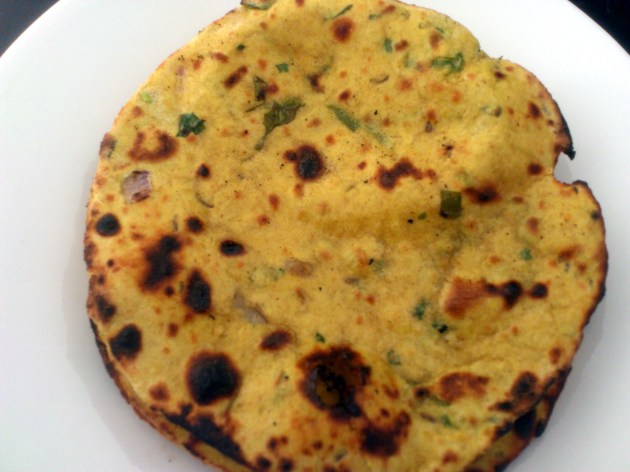
Missi roti is a north Indian flatbread made with whole wheat flour and gram flour. It is my mom’s favourite. This is healthier and tasty compared to the naan or normal tandoori roti. You can substitute the whole wheat flour with the multigrain aata which is readily available these days. If you want it even healthier, you can cook it like tandoori roti and leave out the ghee. I like it more than the normal naan roti.

Fresh coriander and green chillies add aroma and taste of the roti. You can add the green chillies as per taste if you want your roti spicier. Some people even use the left over dal to make the dough. You can even add fresh greens like spinach or fenugreek if you want it healthier.

Traditionally missi roti is cooked like a paratha using ghee on both sides. But I like it healthier so I cook it like phulka. Cooking both sides on griddle and then cooking it on open flame adds to the taste. Roll it out thicker than rotis and they will turn out softer. This is an all season all meal compatible roti. You can have it for lunch or dinner and this tastes best with dal and curries with gravies.

Missi Roti

Ingredients

Makes 4-5

  • 1 cup whole wheat flour (the multi grain aata available these days work perfect too)
  • ¼ cup gram flour (besan)
  • 2 green chillies finely chopped
  • ¼ tsp turmeric powder
  • 1 onion chopped
  • 2 tbsp chopped coriander
  • ¼ tsp carom seeds (ajwain)
  • ¼ tsp cumin seeds (jeera)
  • Salt to taste
  • 1 tsp ghee + 4 tsp ghee to drizzle on rotis

Recipe

Mix the flour, gram flour, chillies, turmeric, onion, coriander, carom seeds, cumin seeds, salt, and 1 tsp ghee with enough water to make a soft dough. Cover the dough and keep it aside for 15 minutes.

Knead the dough a little and divide it into equal portions (4-5). Roll out each portion slightly thicker than normal rotis and cook on hot griddle just like the normal phulka. Drizzle about a tea spoon of ghee and brush it evenly on the roti. You can cook it like a paratha too but I prefer the one that is cooked like roti. Serve hot with dal or sabji.


Pasta with Red Sauce

Pasta with Red Sauce

Pasta for me is undoubtedly one of the best foods on earth. This particular recipe is the first pasta recipe I learnt (I have modified it a little). My friend Deepak’s mom taught me to make this and I am so thankful that she introduced me to this wonderful and versatile food. Pasta can be mixed with various sauces vegetables. Arrabbiata or the spicy red sauce is the most common sauce that we vegetarians especially Indian prefer. This sauce is slightly different version of the simple arrabbiata sauce.

There are different shapes of pasta available but Penne pasta goes well with the red sauce and especially Penne Rigate holds up the tomato based sauces well. Spaghetti is another pasta that goes well with the red sauce. Choose the whole wheat pasta if you want a healthier version. Things to keep in mind while boiling the pasta are; always cook the pasta aldente (that is till it is just done). Over cooking will take away the taste and texture both. Secondly, you do not always need to add oil while boiling the pasta. Just add plenty of water and your pasta will never stick.  

Being a vegetarian does not mean adding just cheese to you pasta sauce. You can make it tastier and healthier by adding the vegetables of your choice. You can experiment with the sauce and add vegetables like carrot, broccoli etc and toppings like corn, olives etc. Traditionally pasta doesn’t have red chilli powder but I add it keeping in mind the taste of people I am cooking it for.

Try to mix the sauce just before serving. Pasta tends to absorb the sauce. If you want to prepare it in advance, save some extra sauce and add it just before serving the pasta. You can prepare the sauce in advance and just boil and toss the pasta in the sauce just before serving. You can sprinkle some cheese on top of the pasta or if you are a cheese lover, just add a layer of cheese on top of pasta and bake till the cheese melts.

Pasta is best enjoyed as a main course. Serve it with warm garlic bread.

Pasta with Red Sauce

Ingredients

Serves 2 (or 1 if you are a pasta lover like me)

  • 250 gms or 2 cups of penne pasta (choose whole-wheat if you want a healthier version)
  • 2 tbsp olive oil
  • 1 tsp oregano
  • ¼ cup onions finely chopped
  • 2 tbsp finely chopped garlic
  • ½ cup finely chopped mixed bell peppers
  • ½ cup finely chopped tomatoes
  • 1 cup tomato puree
  • 2 tsp red chilli powder
  • 1 tsp black pepper powder
  • 2 tbsp fresh cream
  • Cheese to taste and liking (optional)
  • Salt to taste

Recipe

Cook the pasta as per instructions on the packet. You can use the following method if you want to cook it al dente (literally means to the tooth)

In a thick bottomed vessel, heat 2 ½ litres of water. Add 15gms salt to it. Once the water starts boiling add the pasta and cook on medium flame for 11-12 minutes. When you chew the pasta, there should be slight resistance at the centre. Drain the pasta and keep aside. At this time, you can add a little olive oil to the pasta and toss them well so that they do not stick once they are cold.

Heat olive oil in a pan. Add oregano and garlic. Sauté for a minute and add onions. Cook for 1-2 minutes or till the onions are translucent. Add mixed bell peppers and cook for another 2 minutes. Add the chopped tomatoes and salt. Cook for 3-4 minutes mixing the sauce in between. Add the tomato puree, red chilli powder, and pepper powder. Mix well and cook on slow flame till you see oil on top (approximately 5-6 minutes). Keep stirring the sauce in between. Add the fresh cream and switch of the gas. Add the boiled pasta and toss well. If you are not comfortable tossing the pasta, you can use a wooden spatula to very lightly mix the pasta with the sauce making sure you do not break the pasta.

Adding cheese is optional. You can sprinkle parmesan cheese on hot pasta just before serving or if you love cheese with pasta, arrange pasta in a baking dish and cover it with grated cheddar cheese. Bake till the cheese melts and serve hot.

Vegetarian Dumplings

Vegetarian Dumplings

When in Rome, do as Roman do and when in Singapore celebrate the Chinese New Year with dumplings and oranges. This is our first lunar new year in Singapore and it’s been fun so far. Everything is decorated in red and orange. Four days of holidays and family reunions everywhere you see. Unlike the English New Year, Chinese New Year involves lot of preparation, celebrations (15 days), reunion, and traditions. Market is filled with oranges, pomegranates and tens and hundreds of varieties of candies and snacks. People exchange Oranges and Tangerines. Oranges symbolize good luck and Tangerines symbolize wealth. Families get together and cook dumplings with every member taking part in the process. I am not a big fan of Chinese food but I found the idea of dumplings very interesting. Especially the way they are shaped.
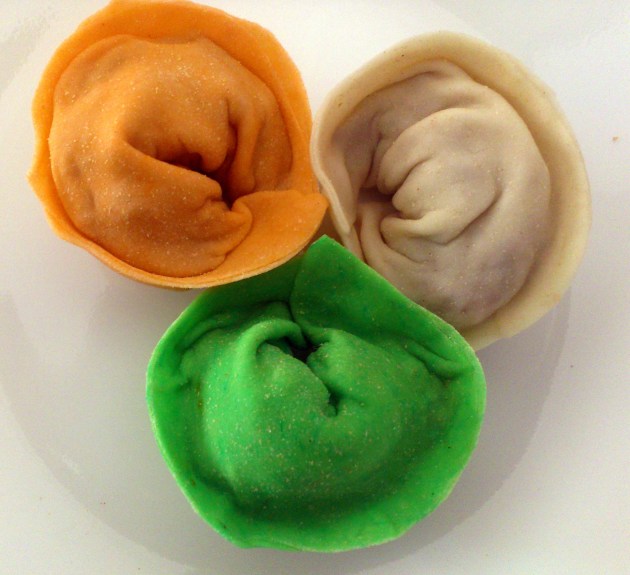
I wanted to try making a vegetarian version of the dumplings (also known as dimsums or pot stickers). Boiled Dumplings are called Jiaozi. Pot stickers are famous in the west and are fried in a small amount of oil before steaming them slightly.

You can practically fill the dumplings with anything you like. I have used carrots, cabbage, beans, and paneer. Baby corn, Mushrooms, tofu are good options to try.

Shaping the dumplings is not as tough as it looks. The trick is to roll out the dough thin on edges and slightly thicker at the center. You can buy the ready made dumpling sheets too. You can even make colorful dumplings by adding natural colors. Add spinach puree to the dough for green and carrot puree for orange color.
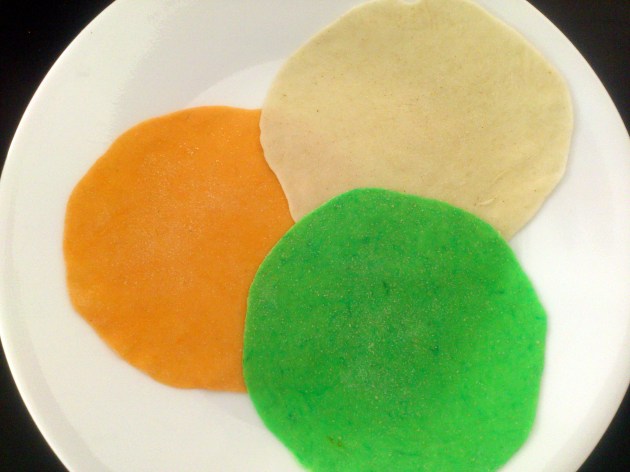
Dumplings are always served with a dipping sauce. I wanted to make a spicy sauce which could complement the not so spicy dumplings and wanted to stay away from the oily dips. You can try the traditional soy sauce based dips too which are not very spicy. Dumplings are usually served as a starter or side dish. Happy New Year!

Vegetarian Dumplings

Ingredients

Makes 16-18 dumplings

For the Dough

  • ½ cup all-purpose flour (Maida)
  • 2-3 pinches of salt
  • Water to knead the dough

For the Filling

  • 1 ½ tbsp. chopped ginger
  • 2 tbsp sesame oil
  • 1 small onion finely chopped (use spring onion if available)
  • ½ cup mixed vegetables (cabbage, carrot, beans)
  • 5 tbsp paneer crumbled
  • 1 tbsp finely chopped coriander
  • 1 tbsp corn flour diluted in little water
  • ½ tbsp. soy sauce
  • Salt and pepper to taste

For the Dip

  • 5 fresh red chillies
  • 5-6 garlic cloves chopped
  • ½ tomato chopped
  • 5 tsp rice vinegar
  • 3 tsp brown sugar
  • Salt

Recipe

Add salt to the all-purpose flour and knead into a soft and smooth dough using enough water. Cover and keep aside for 10-15 minutes.

To make the dipping sauce, combine all the ingredients and blend them in a mixer till smooth.

In a wok or kadhai, heat the sesame oil over medium heat. Add the ginger and stir-fry for about 30 seconds, until aromatic. Add the onions and cook for 1-2 minutes. Add the chopped vegetables, paneer, salt, pepper, soy sauce, and coriander. Add little water and stir to combine. Cover and cook for 3-4 minutes or until the vegetables and soft. Stir the corn flour mixture and add it to the filling. When the mixture thickens, turn off the heat. Transfer to a bowl and set aside to cool completely before assembling the dumplings. You should have about one cup of filling.

Divide the dough into equal portions and roll out thin sheets around 3 to 31/2 inches.

To make the dumplings, hold a sheet in a slightly cupped hand. Scoop up about 1 tablespoon of filling with a dinner knife, or fork and position it slightly off-center toward the upper half of the wrapper, pressing and shaping it into a flat mound and keeping about 1/2 to 3/4 inch of wrapper clear on all sides. Then fold, pleat, and press to enclose the filling to create a half-moon. You can steam them as is or try different shapes by adding pleats, joining the ends of the crescent etc.

Place the dumplings in the steamer at least an inch away from the edges. Steam for 8-9 minutes until slightly puffed and translucent.

If you want to cook them like pot stickers, heat little oil (appx 1tsp) in a pan. Add the dumplings and cook till they are little crispy. Add little dip and some water and cover immediately. Cook for 2-3 minutes. Remove the cover and toss to coat the dumplings with the flavor sauce. Cook little more till the sauce dries.

Serve immediately with the dipping sauce.


Rotli Nu Chaas Valu Shaak (Leftover Rotis in Spiced Buttermilk)

Left Over Roti Snack

Rotli Nu Chaas Valu Shaak


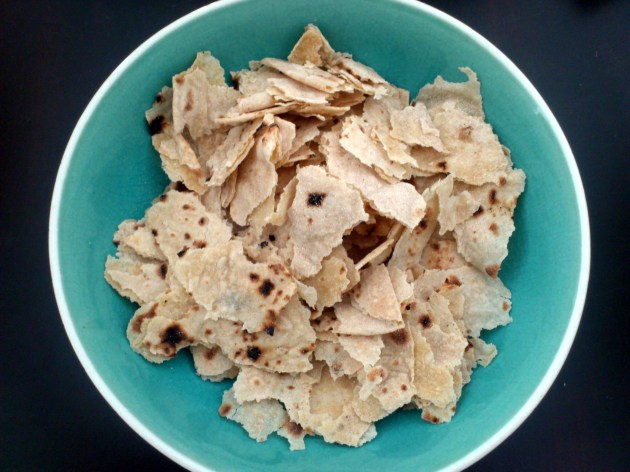
Rotli nu chaas valu shaak is leftover rotis cooked in yogurt and few spices. It is like a quick and easier form of dal dhokli. Some days are just lazy when you don’t feel like cooking but you still want to eat something healthy and tasty. In a place like Singapore where vegetarian food is not as easily available as in India, home food always tastes better and is sometimes the better or only option. This is one of the quick fixes when everyone is tired or there are leftover rotis at home. There is a similar dish that is made at my place. I will post that soon. This is one of the best dishes that my mom in law prepares.

Somehow all the moms have this trick of transforming simple things into yummy delightful meals. They do not even use fancy ingredients. Just a few basic spices and you endup raving about the same leftover food which you would have had made faces at a while ago.

This tastes even better if the butter milk is lightly sour. Make sure to keep stirring the buttermilk till it boils. Since I was using the store bought thick curd for buttermilk, I added more water, if you are using homemade curd you can reduce the quantity of water. This is healthy, quick, and delicious and can be enjoyed as lunch or dinner. The only thing you need to keep in mind is that you cannot prepare this in advance. It tends to get lumpy as it gets cold. This one pot meal is best enjoyed hot.

Rotli Nu Chaas Valu Shaak (Leftover Rotis in Spiced Buttermilk)

Ingredients

Serves 2

  • 5 whole-wheat rotis
  • 1 tbsp oil
  • ¼ tsp mustard seeds
  • 6-8 curry leaves
  • 1 green chilli slit
  • 2 cloves of garlic chopped
  • 1 dry red chilli
  • 1 ½ cups buttermilk (I used ½ cup curd and 1 cup water)
  • ¼ tsp turmeric powder
  • 1 tsp red chilli powder
  • 1 tbsp fresh chopped coriander

Recipe

Tear the rotis into small and medium bits and keep aside.

Whisk together the buttermilk, turmeric, red chilli powder, and salt. Keep aside.

Heat oil in a deep pan or kadhai. Add mustard seeds. Once the seeds pop, add curry leaves and green chilli. Add chopped garlic and dry red chilli and cook for 30 seconds to one minute. Add the buttermilk and bring to boil while stirring. Add the roti pieces and reduce the flame to minimum. Check for salt and spice and make adjustments if required. Cook for 5-6 minutes, till the yogurt gets thick and rotis get soft.

Do not stir a lot after you have added the rotis. Just a mix or two should be good. Add chopped coriander and serve immediately.

Til Papdi (Caramelized Sesame Seeds)

Til Papdi (Caramelized Sesame Seeds)

Til Papdi or caramelized sesame seeds is a sweet prepared in India for the winter festivals like Makar Sankranti, Pongal, Lohri etc. Variety of sesame seed sweets are made and exchanged in various parts of India during winters and especially for the festivals of Sankranti/Lohri. At my home it is mostly Til Laddus (sesame laddus) for Sankranti but my dad and I like Til Papdi more and my mom makes sure to have enough supply at home. There is no winter in Singapore and no festival feeling either. When my mom called to wish me and asked me to make Til papdi for my son, I was apprehensive as I had never made this before. I am glad I made it as he just loved it and enjoyed eating it as much as I do. This recipe does not include any nuts as I was making it for my little one. You can add chopped nuts if you like.

The names of the festivals and the way they are celebrated differs throughout the country. Only practice common is to eat sesame seeds on the festival day. Sesame seeds are high in iron and calcium and also helps in lowering cholesterol levels. Roasting the sesame seeds lightly adds the crunch to til papdi.

This sweet can be made very quickly and needs very few ingredients. If you want a healthier version, you can replace sugar with jaggery. Be very careful while working with sugar. If you let the sugar melt longer, the til papdi will taste bitter.

Though it takes very less time to make this sweet, it needs lot of practice. The thinner you can roll out a til papdi, the better it tastes. Speed is the key to making perfect til papdis. You need to roll out the papdi before the mixture cools down. You can either make papdi mixture in small batches or put the bowl of the papdi mixture in hot water so that the mixture remains hot while you roll out the papdis. Once you have mastered rolling out the papdi quickly, you can try cutting it in various shapes while it is still hot. Store til papdi in an airtight container and put a butter paper or plastic sheet between two papdis so that they don’t stick.

Til Papdi (Caramelized Sesame Seeds)

Ingredients

Makes 10 pieces

  • 100 gms white sesame seeds
  • 75 gms sugar
  • Little ghee for greasing

Recipe

Lightly roast the sesame seeds and keep aside. Heat sugar in a thick bottomed pan. Once the sugar melts, quickly add the sesame seeds and switch off the gas. Mix well.

Grease a clean flat work surface and a rolling pin. Take a little mixture at a time and roll it out as thinly as possible. Make rest of the papdis in same manner. If the mixture cools down, heat it up a little and you should be able to work with it again.

Chilla/Chilve Vali Kadhi

Chilla/Chilve Vali Kadhi

Kadhi is a tangy, yogurt based north Indian dish that is served with plain rice. There are various types of this dish based on the regions. There is Punjabi kadhi, Rajasthani kadhi, Gujarati kadhi, Sindhi kadhi and a lot more varieties. The basic mixture of gram flour and slightly soured yogurt is same and the tempering and flavours change as per the region.

This recipe is of chilva or chilla vali kadhi. My mom’s family is from Haryana and their cuisine differs from the marwadi cuisine that is made at my place. I don’t know the exact region this kadhi belongs too but this particular kadhi is famous at my maternal grandmom’s place. This is kind of healthy too. Chilva is a gram flour pancake which is made using very less oil compared to the deep fried pakodis that are used in the regular kadhi.

The tempering or tadka for kadhi too differs as per the regions. Just replacing the oil with ghee in the tadka makes a lot of difference to the kadhi. You can even add whole coriander seeds and fennel seeds to the tadka.

Kadhi is usually served with plain rice. I like it more with hot puris. At my place kadhi is served with rice and pressure cooked mung beans. Mung chawal Kadhi is the classic Rajasthani preparation and is a complete meal.

Chilla/Chilve Vali Kadhi

Ingredients

For Kadhi

  • 1 cup yogurt
  • 2 cups water
  • 1 ½ tbsp. gram flour (besan)
  • ¼ tsp turmeric powder
  • Salt to taste

For Chilva/Chilla

  • 3 tbsp gram flour (besan)
  • Few pinches turmeric
  • Salt to taste
  • 2-3 pinches carom seeds (ajwain)
  • 4-5 tbsp oil for frying

For Tempering

  • 2 tbsp oil
  • ½ stick cinnamon
  • 4 cloves
  • 6-8 curry leaves
  • ¼ tsp cumin seeds
  • ¼ tsp mustard seeds
  • ¼ tsp fenugreek seeds
  • 3 inch piece of ginger grated
  • 1 green chilli slit
  • 1 tsp chilli powder
  • ¼ tsp asafoetida
  • 2 dry red chillies

Recipe

Mix all the ingredients for kadhi using a blender or whisk making sure there are no lumps. Keep aside.

To prepare the chilva or chila, make a paste of pouring consistency (of dosa or dhokla batter consistency) using gram flour, salt, turmeric, carom seeds and water. Heat a griddle and put around half table spoon of oil on it. Take a spoonful of the prepared batter and drop it on the oil. It should be like a small round coin sized pancake. Let it cook for 10-15 seconds. Flip on other side and cook for another 10-15 seconds. Move to the side of the griddle. Make rest of the chilvas using the same method adding oil in between. Remember to flip the chilvas on the side of the griddle and take them off from the griddle once you see brown spots forming on the chilvas. Keep the chilvas aside on an absorbent paper.

In a thick bottomed pan or kadhai, bring to boil the mixture for kadhi. Remember to stir continuously till the kadhi boils. Simmer the gas.

Heat two tablespoon oil in a kadhai. Add mustard and cumin seeds. Once the seeds pop, add curry leaves, dry red chillies, mustard seeds, cloves, and cinnamon. Sauté for 30-40 seconds. Add the green chilli, grated ginger, asafoetida and cook for 30-60 seconds. Add the red chilli powder and switch off the gas immediately. Pour this tempering on the kadhi and mix well.

Add the chilvas to the kadhi just before serving and cook the kadhi for 3-5 minutes. Garnish with chopped coriander.

Eggless Blueberry Cheesecake

Eggless Blueberry Cheesecake

Blueberry cheesecake – Eggless – No Bake! Any better way to start the New Year? I enjoy making eggless desserts and enjoy it even more when people around me love to eat them. This is one of my dear friend’s favorite dessert. This post comes a little late but I wanted to make something special to thank her for all the effort she has put in helping me create this blog. Thank You Sowmya for all the late night nonsense discussions, answering my silly questions, and helping me create this blog. Hope this post will remind you of the time we spent in Bangalore searching for the perfect blueberry cheesecake.

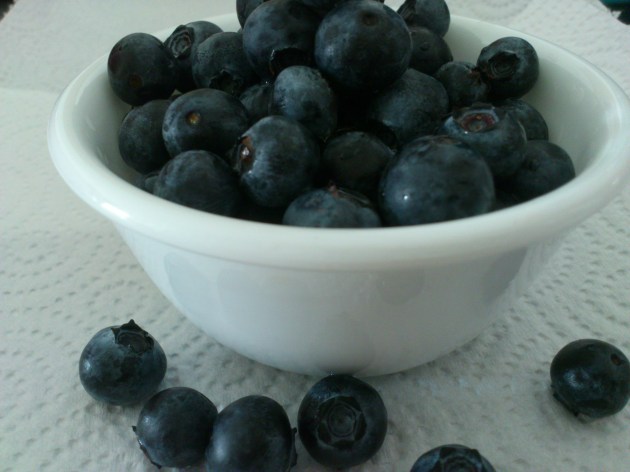
Blueberries are rich in antioxidants, yummy, are in season now, and most of all I got them cheaper at the supermarket this week. Traditionally, cheesecakes are made using cream cheese but I have used Mascarpone cheese for this cheesecake. Combination of Mascarpone and fresh whipped cream seldom goes wrong.

I have used Mcvites Digestive Biscuits for the base. You can use graham crackers or even Marie biscuit based on your choice. Oreo is another great choice if you are a Oreo lover. I like the base nutty so I have added cinnamon powder. You can experiment with the base too by adding powdered almonds, walnuts, and spices like nutmeg and cinnamon.

You can substitute blueberries with other berries like strawberries, raspberries, or even cherries. If you are lazy to make the compote, you can buy the ready made fruit preserves available in the market. Happy New Year!!!

Eggless Blueberry Cheesecake

Ingredients

Serves 6

For the Base

  • 6 digestive biscuits
  • 1 tbsp cocoa powder
  • ½ tsp cinnamon powder
  • 2 tbsp brown sugar
  • 2 tbsp butter at room temperature

For Filling

  • 2/3 cup mascarpone cheese
  • 2/3 cup heavy fresh cream
  • ½ cup sugar
  • 1 tsp vanilla essence
  • 2 tsp lemon juice

For Topping

  • 2/3 cup fresh blueberries
  • 2 tbsp sugar
  • 2-3 tsp lemon juice
  • Whipped Cream (Optional)

Recipe

Crush the digestive biscuits to crumbs. You can use a hand mixer for this. Mix rest of the ingredients for base. The mixture should be like moist sand. Press down the mixture tightly into a spring form pan and put it in fridge for 15-20 mins to set.

In a bowl, whip together the cream and 2 tbsp sugar till stiff peaks form. Keep aside.

In another bowl, beat the mascarpone cheese with remaining sugar, lemon juice, and vanilla essence till it is smooth and creamy. Fold in the whipped cream carefully and spread this mixture on the base. Let it set in the refrigerator for 3-4 hours.

In a pan, put the blueberries, sugar, and ¼ cup water and cook on low flame till you get a thick sauce like consistency. This should take approximately 7-10 minutes. Add the lemon juice in the end and mix well. Keep aside to cool completely.

Once the cheesecake is set, spread this blueberry topping and serve chilled. You can use whipped cream also to decorate the cheesecake.


Paneer Capsicum Masala

Paneer Capsicum Masala

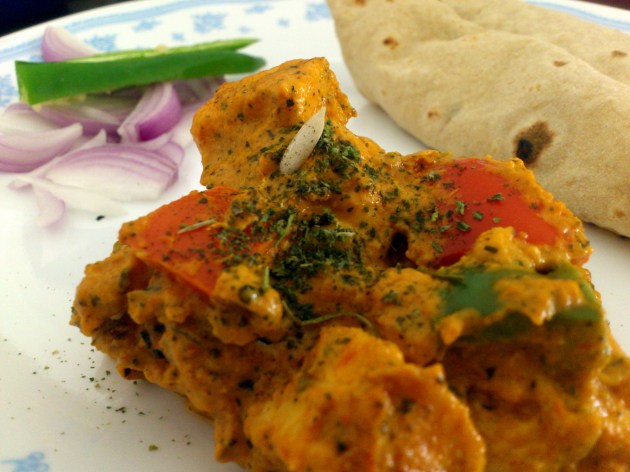
Paneer is one of the favorite vegetarian curries at the restaurants. This Indian version of cottage cheese is full of protein. It is a different story that the rich and heavy gravy they prepare at the restaurants almost negates the health benefits. I have tried making restaurant style paneer curry at home many times and this recipe comes closest. For me paneer and capsicum are the best combination. Fresh paneer and capsicum are key to a yummy curry.

I do not get fresh paneer here and I rely on frozen paneer when I have guests at home. Put the frozen paneer in hot water for 3-5 minutes and you have soft paneer ready to cook. Now comes the tricky part. Restaurant style gravy but in a slightly healthier version. I leave out the butter for sure. Second substitution I make is, to reduce the quantity of cashew nuts to half and add melon seeds.

I prepare the gravy in advance and freeze it in batches. Every time I want to cook paneer ki sabji, I just take one batch of gravy and defrost it and cook it with panner and the vegetables of my choice. I have the curry ready in minutes.

This curry can be served with hot roti, naan, or with jeera rice. Do not forget fresh cut or pickled onions and some fresh non spicy green chillies.

Paneer Capsicum Masala

Ingredients

Serves 4

  • 1 ½ cup paneer
  • 1 cup mixed bell peppers chopped into square medium sized pieces
  • 1 small onion chopped

For Gravy

  • 1 big tomato roughly chopped
  • 1 small onion roughly  chopped
  • 20-22 cashew nuts
  • 3 inch piece of ginger chopped
  • 4 cloves of roughly garlic
  • 1 green chilli
  • 2 tbsp melon seeds
  • 1 ½ tbsp kasoori methi
  • 3 tsp chilli powder
  • 1-2 tbsp fresh cream (optional)
  • ¼ tsp turmeric powder
  • ¼ tsp cumin seeds
  • 4 tbsp oil

Recipe

Heat 3 tbsp oil in a kadhai or a deep pan. Add green chilli, ginger, and garlic. Once the garlic is lightly browned, add onions and saute. Cook till onions are translucent. Add cashews and melon seeds and cook till the cashews are lightly browned sauteing in between. Add the tomatoes, salt, and red chilli powder and mix well. Cook till oil separates and tomatoes are mushy (2-3 minutes). Switch off the gas and let this mixture cool. Once it is cool, grind this to a fine paste and keep aside.

You can store this gravy in the freezer for future use too.

Heat 1 tbsp oil in a kadhai or thick bottomed pan. Add cumin seeds. Once the seeds pop, add onions and cook till they are translucent. Add bell pepper and cook for 1-2 minutes. Add paneer and sauté for 1-2 minutes. Add the gravy and mix well. Add little water if the gravy is too thick. Cook for 3-4 minutes or till oil separates. Garnish with fresh cream and chopped coriander and serve with hot rotis or rice.