Aalu Matar (Potatoes and Peas Curry)

Aalu Matar (Potatoes and Peas Curry)

Potato is the most versatile of vegetables. It is a staple diet of most of the middle class vegetarians.  You can combine it with any vegetable. This was the most common curry in our lunch box. There was a time when I hated aalu ki sabji. My mom makes at least 8-10 varieties of aalu sabji. Aalu fry, jeera aalu, aalu matar, aalu tamatar, aalu beans, dahi vale aalu and the list goes on. I finally made friends with potato when I went to Cardiff for studies. There were 4-5 variety of potatoes available and I started experimenting with this vegetable.
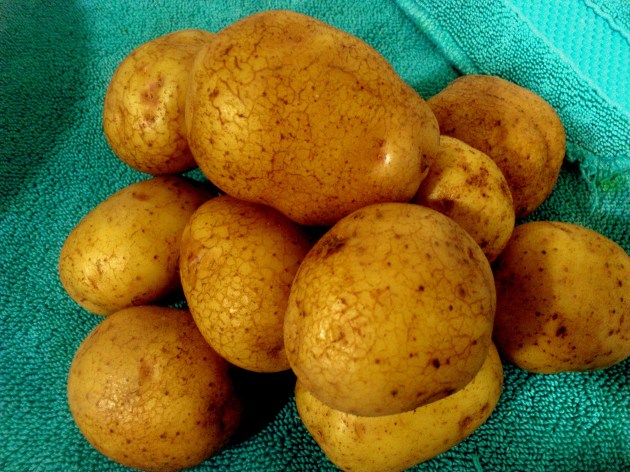
The food marathon that I went on after my wedding had this aalu matar following me at every house and I again started running from aalu ki sabji. Finally, when I am out of India again Aalu matar has become my friend again.

Aalu Matar (Potatoes and Peas Curry)

Ingredients

  • 2 potatoes peeled and cubed (Russet potatoes are good for this curry)
  • ½ cup fresh/frozen peas
  • 2 tbsp oil
  • ¼ tsp mustard seeds
  • ½ tsp cumin seeds
  • ¼ tsp asafoetida
  • 6-8 curry leaves
  • 2 inch piece of ginger grated
  • 2 green chillies finely chopped
  • 1 small onion finely chopped
  • 1 tomato finely chopped
  • 2 tsp red chilli powder
  • 2 tbsp coriander powder
  • ¼ tsp turmeric powder
  • 2 tbsp chopped coriander
  • 1 1/2 cups water

Recipe

Heat oil in a pressure cooker. Add cumin and mustard seeds. Once the seeds pop add asafoetida, curry leaves, ginger, and green chillies. Sauté for 30-40 seconds. Add chopped onions and cook for 1 min or till the onions are translucent.

Add tomatoes and salt and cook for 1-2 two minutes on a slow flame. Add turmeric, red chilli powder, coriander powder. Mix well and cook for 1 minute. Tomatoes should reduce to pulp by now and leave oil. Add peas and potatoes. Add 1 1/2 cups water and close the lid and pressure cook for 3 whistles.

Once the pressure is released open the cooker and check the curry for seasoning and adjust salt or spice accordingly. Add chopped coriander and mix.

Serve with hot puri, roti, or jeera rice.

Aam Panna

Aam Panna

While most people are busy gorging on variety of Mangoes during the summer season, my favorite way of having mango is the Aam panna made with raw mangoes. Raw mango has the quality to cool your body. Summer in Hyderabad can be pretty bad. With temperatures soaring to even 43 degrees, this was a regular drink at home. Every day when we came back from school our mom used to have this drink ready for us.

Since Singapore has a hot and humid weather all the year round, Aam panna can be made and enjoyed anytime of the year. I love this drink so much that I don’t mind travelling all the way to Mustafa center to buy the mangoes. 

You can roast the mangoes if you like but I like it the way my mom makes it. It is quick and easy and saves me time. I like to prepare this drink in quantity so that I can just chill it and enjoy the whole weekend.

Aam Panna

Ingredients

Makes 6 glasses

  • 2 raw mangoes
  • 4 tbsp sugar
  • ½ tsp salt
  • 1 tsp rock salt (kala namak)
  • 2 tsp cumin (jeera) powder
  • 500 ml water

Recipe

Pressure cook the mangoes with some water (approximately 300ml) for 5-6 whistles. Extract the mango pulp and throw away the outer skin and seeds.

Add sugar, salt, rock salt and blend. Add water and cumin powder. Adjust sugar, salt as per taste. Serve chilled.

You can adjust the sugar and water depending on how sour the mangoes are.

Gulab Jamun

Gulab Jamun

When I decided to start a food blog and was thinking of recipes to include, this was the first recipe that came to my mind. Gulab jamun; this is perhaps the best of the sweets that my grandmother makes. I have very fond memories of helping my grandmother roll the gulab jamuns. As an 8-9 year old, I used to feel so proud to have contributed to a recipe.

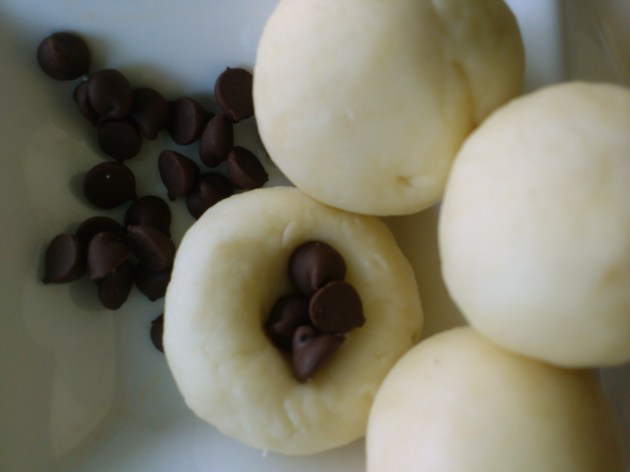
Though I am not a fan of oily and fried food, this is an exception. I do not prefer gulab jamun made in oil. It has to be made in ghee (clarified butter). I think that is what gives it the yummy taste and aroma. Fresher the ingredients, better the taste. There are various versions of this sweet too. You can stuff it with mishri, chironji, or any other dry fruit of your choice. Though I do not try to modify such time tested recipes, this time I tried using chocolate chips as a stuffing and was happy with the result.

Gulab Jamun can be enjoyed warm and cold both. It particularly goes well with Vanilla Ice-cream. Warm Gulab Jamun with a dollop of Vanilla Ice-cream tastes delicious. What else, it is indeed a quick dessert.

Gulab Jamun

Ingredients

Makes 10 Gulab Jamuns

  • ½ cup dried whole milk (khoya/mawa)
  • 1 tbsp  Indian cottage cheese (paneer)
  • 1 tbsp multipurpose flour (maida)
  • 2 pinches soda
  • 3-4 pinches cardamom powder (ilaichi)
  • Few chocolate chips
  • 8-10 strands of saffron (kesar)
  • 1 ½ cup sugar
  • 2 cups water
  • Pure ghee to fry the gulab jamuns
  • 1-2 tbsp water
  • Chopped almonds for topping

Recipe

Crumble or grate mawa and paneer. Add maida, soda, and cardamom powder. Mash all the ingredients using the heel of your palm and keep mixing till you get an even mixture. If you find the mixture too dry, you can add 1 tablespoon water at a time till you get a soft dough. Divide the dough into 10 portions and roll into balls. You can add the stuffing at this time. Press the ball to make a hole, add the stuffing, seal the ends and roll into a ball again making sure there are no cracks.

Heat sufficient ghee in a thick bottomed deep pan/kadai.  Fry on sim gas till golden brown. Do not over crowd the pan. Once you put the gulab jamuns in hot ghee, do not put spoon in the pan till the balls come up in ghee or they will break.  Fry gently and drain and keep aside.

In another pot, heat sugar and water till the syrup becomes light golden. Add saffron strands. Do not over boil the sugar syrup. It should be boiled enough to be sticky. Switch off the gas as soon as the syrup startsbto boil and let it cool a little. Add the gulab jamuns to the syrup when it is warm. Let the gulab jamuns soak in the syrup for at least 30 minutes before serving. You can garnish them with chopped almonds or pistachios.

Masala Rice

Masala Rice

I call this a leftover makeover dish. Leftover rice has multiple uses and this is the most popular one at my home. Recooking it with  simple everyday spices and seasonal vegetables or herbs gives rice a completely new look and taste.

Every family has a different version of this rice. My mom adds a twist to this simple dish with the seasonal veggies (anything from green beans, potatoes, peas), I add tomatoes or lime juice, my mom in law adds coriander powder and I have seen my friend add a dollop of curd in the end. You can experiment with lots of flavours and vegetables and add your own twist to this quick but delicious recipe.

At my home, we eat it as breakfast or when we don’t like the lunch/dinner menu. It can be eaten with curd, pickle or simply without any accompaniment. I like it with basic curd raita.

Masala Rice

Ingredients

  • 2 cups leftover rice
  • 2 tbsp oil
  • ½ tsp mustard seeds
  • 1 tsp cumin seeds (jeera)
  • ½ tsp asafoetida
  • 8-10 curry leaves
  • 2 green chillies slit
  • 2 inch piece of ginger grated
  • 2 dry red chillies
  • 2 tbsp or handful of groundnuts
  • 1 onion chopped
  • 1 tsp red chilli powder
  • ½ tsp turmeric powder
  • 2 tsp coriander(dhaniya) powder
  • ½ tsp garam masala
  • 1 tsp lime juice
  • Few springs of coriander finely chopped
  • Salt to taste

Recipe

Heat oil in a thick bottomed pan. Add mustard seeds, cumin seeds, and asafoetida. Once the seeds pop, add curry leaves, grated ginger, green chillies and dry red chillies.

Add groundnuts and sauté for a minute. Add onions and sauté till the onions are translucent.

Add rice, turmeric, red chilly powder, coriander powder, garam masala, and salt. Mix thoroughly and cover and cook for 3-4 minutes. (You can add chopped tomatoes at this stage if desired and cook covered for another 3-4 minutes).

Add lime juice and coriander leaves and switch off the gas.

Serve with curd or pickle.

Bhujiya Paratha (Spicy Flatbread)

Bhujiya Paratha (Spicy Flatbread)

We get lot of sweet and savories from my maternal grandmother’s place. Sometimes it is so much that we are left with lot of them even after distributing it to relatives, neighbors, and everyone else around. This is when my mom uses them and creates new dishes and we relish them without knowing that it is made from the same sweet or savory we have been running away from.

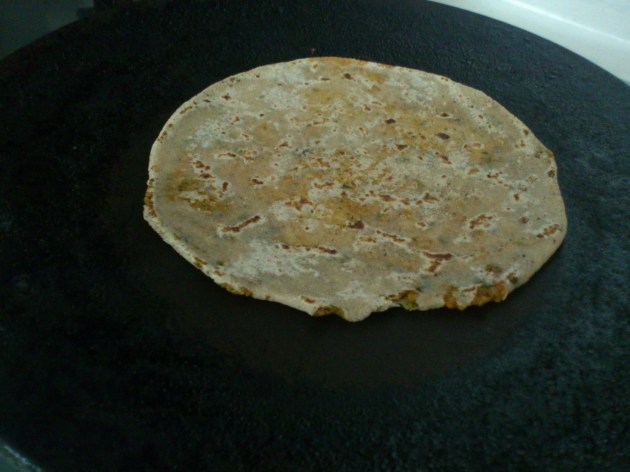
Be it the laddu ki roti (will post it some other time for sure) or the bhujiya parathas she does an awesome job with leftover foods. These parathas are extremely simple and quick to make and taste yummy.

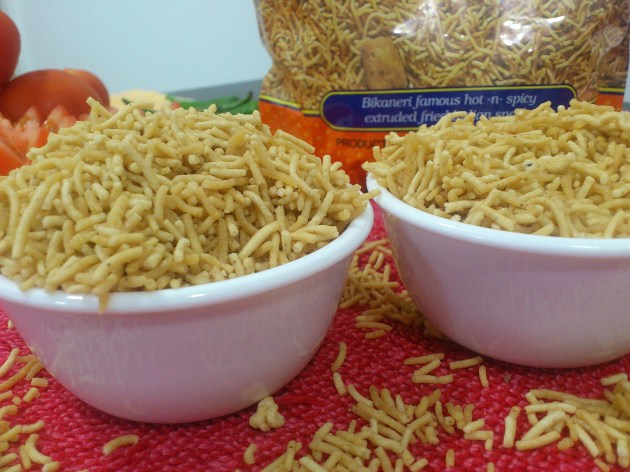
She makes these parathas with the teekha gathiya or sev that comes with boondi. Since I don’t have that sev here, I tried it with the spicy bikaneri bhujiya sev (the Haldiram one) and it turned out just good.  You can serve the parathas with fresh plain yoghurt and pickle.

Ingredients

Makes 6 Parathas

  • 2 cups whole wheat flour
  • 1 cup bhujiya sev
  • 1 onion chopped
  • 3 green chillies
  • 6-8 sprigs of fresh coriander
  • Salt to taste
  • Water to knead the dough

Recipe

Add wheat flour, salt and water and knead a slightly stiff dough and keep it aside for 10-15 minutes. Don’t make the dough too soft or else you won’t be able to roll the parathas.

Blend Bhujiya, onion, green chillies, coriander and little salt to a coarse paste. Be careful about the salt as the bhujiya already has salt in it. Divide this filling into six portions.

Divide the dough into six equal parts. Roll them into balls and dust each ball with dry flour and roll into small disks. Stuff with one portion of the bhujiya mixture and seal the edges to make a ball again. Flatten lightly and roll out into paratha dusting with dry flour frequently.

Heat the griddle and place the paratha. Flip it after around 20 seconds when you see light brown spots appearing on the inner side of paratha. Brush with some oil and flip again. Brush with oil on other side and cook the paratha on both sides by pressing the paratha.

Serve hot parathas with yoghurt and pickle.

Sev Tamatar (Gujarati Tomato Curry)

Sev Tamatar (Gujarati Tomato Curry)

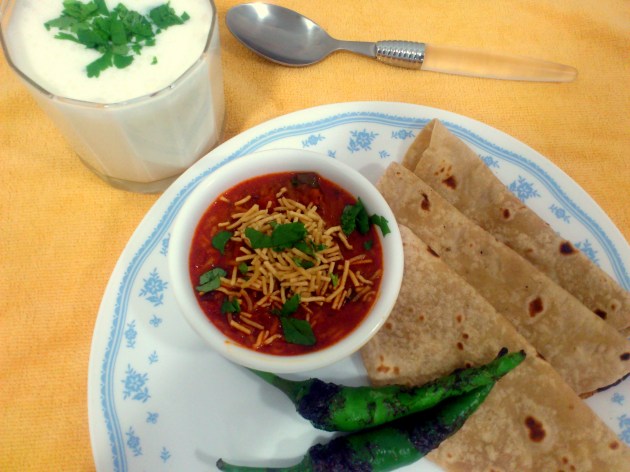
Here comes another Gujarati favorite curry. It is a perfect quick cook recipe. Like most of the Gujarati recipes, this one too is a combination of sweet, sour, and spicy.

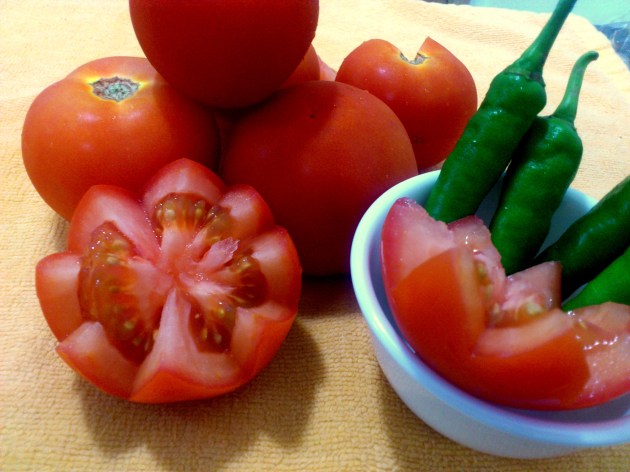
The ideal tomatoes for this curry would be the sour tomatoes (they are called nati tomatoes in Bangalore and desi tamatar in north). I have used the roundest available tomatoes in Singapore and the curry still turned out well.

The crisp sev is a perfect complement to the succulent tomatoes. I prefer the spicy bhujiya sev available in the market. You can also use the non-spicy sev if you don’t like your food very spicy.

This crunchy curry can be enjoyed best with soft rotlis (chapati in Gujarati) and roasted Bhavnagri chillies* and a glass of chilled chaas (buttermilk) to wash the spice down. I do not prefer this as sweet as it is originally made. You can always adjust the sweet and spices as per taste.

*For roasted Bhavnagri chillies (you can use any other non-spicy chilli if you don’t get Bhavnagri chilli), just slit the chilli and line it with a pinch of salt and roast it on flame till you see black spots on the chilli.

Sev Tamatar (Gujarati Tomato Curry)

Ingredients

  • 2 tomatoes chopped
  • ½ cup sev
  • 3 tbsp groundnut oil
  • ¼ tsp mustard seeds
  • ¼ tsp cumin seeds (jeera)
  • 2 green chillies slit
  • 10-12 curry leaves
  • 2 inch ginger piece grated
  • ½  tsp asafoetida (heeng)
  • ½ tsp turmeric
  • ½ tsp chilli powder
  • 4 tbsp coriander powder
  • 2 tsp sugar
  • 2 tsp lime juice
  • ½ tsp garam masala
  • ½ cup water
  • 2 tbsp fresh coriander chopped
  • Salt to taste

Recipe

Heat oil in a thick bottomed deep pan (kadhai). Add mustard seeds and jeera and let them pop. Add curry leaves, green chillies, and ginger and sauté.

Add asafoetida, turmeric, chilli powder, and coriander powder and sauté and immediately add chopped tomatoes and cover for 10-15 seconds.

Uncover and add salt, sugar, lime juice, garam masala and water and mix well.

Let it cook for 3-5 mins till you see oil on top. Just before serving add chopped coriander and sev. Mix well and serve with hot rotlis.

Paneer Bhurji (Cottage Cheese Scramble)

Paneer Bhurji (Cottage Cheese Scramble)

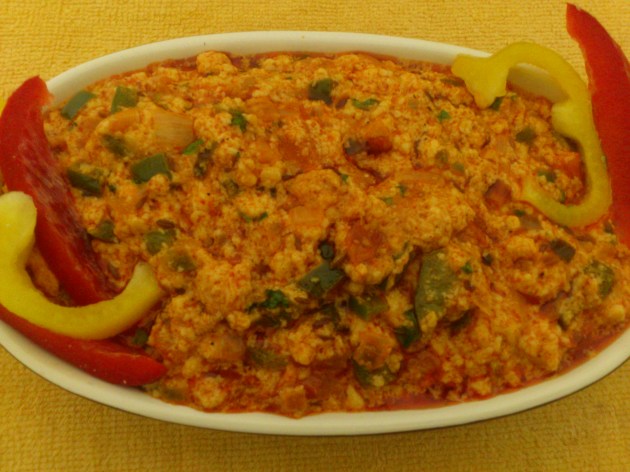
Paneer or Indian cottage cheese is one of the most popular cooking ingredients in northern part of India. It is made by curdling fresh milk. Taste of any good paneer recipe is directly proportional to the freshness of paneer. There are a variety of frozen paneer cubes/slabs available at the super markets. To make paneer at home, please refer to my post on homemade paneer.

As kids, eating paneer was a luxury. We used to get to eat paneer sabji whenever milk curdled at home or if it was a festival or celebration. When I moved to Bangalore, I was pleasantly surprised to see fresh paneer being sold at the supermarket nearby. Namdharis and Karthik’s sweet shop are probably the best places in Indiranagar to buy fresh paneer.

Now in Singapore, I was even more surprised to find variety of frozen paneer from its homeland Punjab. Mustafa centre stocks a variety of paneer (slab, pieces, & fried). I just lapped up some frozen paneer from Mustafa and tried this quick recipe and it did taste just like it used to taste with fresh paneer in Bangalore.

Paneer Bhurji (Cottage Cheese Scramble)

Ingredients

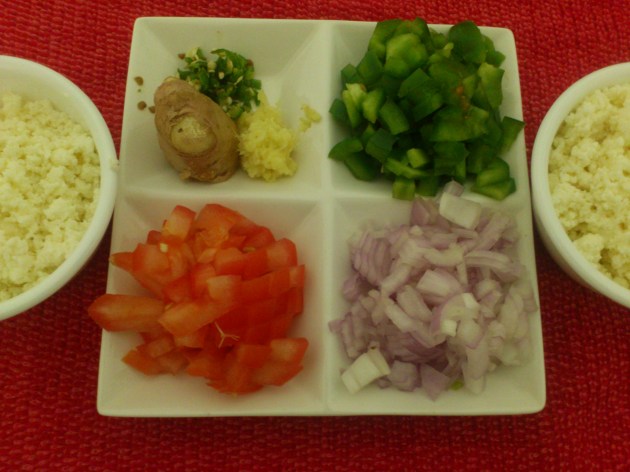
  • 1 cup fresh paneer crumbled
  • 2 tbsp oil (you can use butter if you like a calorie rich version)
  • ½ tsp cumin seeds (jeera)
  • 2 inch piece of ginger grated
  • 2 green chillies finely chopped
  • 1 small onion finely chopped
  • 1/2 capsicum finely chopped
  • 1/2 tomato finely chopped
  • 1 ½ tsp red chilli powder
  • ¼ cup milk
  • ½ tsp of garam masala
  • 1 tbsp of fresh coriander leaves finely chopped
  • Salt to taste

Recipe

Heat oil in a thick bottomed pan.

Add jeera and let it crackle. Add ginger and green chillies. Once the chillies are slightly browned, add onions and let them brown a little.

Add capsicum and sauté for about 1 minute; add tomatoes and let them cook till oil separates and tomatoes are mashed when you mix them. Add salt and red chilli powder and cook for a minute.

Now add the crumbled paneer and milk. Milk helps the paneer absorb the spices and makes the bhurji soft. If you find the bhurji dry, you can add couple of more tablespoons of milk. Mix everything and cook for 3-4 minutes. Finally add the garam masala and finely chopped coriander just before switching off the gas.

You can serve paneer bhurji with hot naan, rotis, parathas, or add it as a filling to sandwiches, wraps, or dosa.

Garlic Chutney

Garlic Chutney

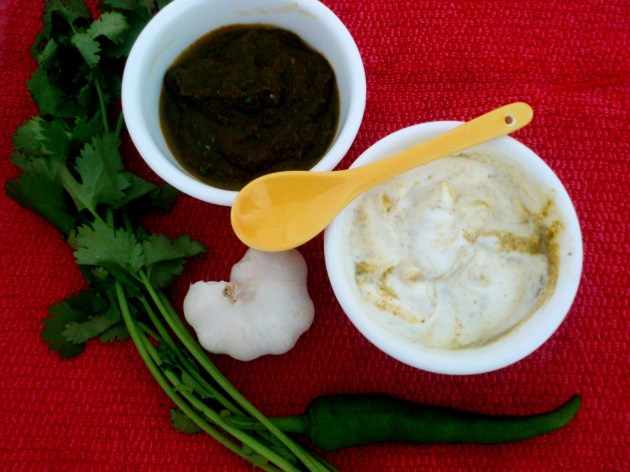
I was introduced to this wonderful delight at my in laws’ place. This is my favorite accompaniment with theplas. This sweet, sour, spicy, tangy bursts of flavors in your mouth cannot be described. It can only be experienced.

There are three ways of eating this. One is mix one spoon of chutney is one small bowl of fresh yoghurt, second is to add it in oil. It sounds weird but it just tastes perfect with hot steamed dhoklas. Add one spoon chutney to 4 spoons of groundnut oil. Lastly you can eat it as is with theplas. You can find the recipe of thepla here.

Garlic Chutney

Ingredients

  • 1 whole garlic peeled
  • ½ bunch coriander
  • 2 green chillies
  • 2 tsp red chilli powder
  • 2 tsp sugar
  • 3 tsp lime juice
  • 1 tbsp groundnut or any other cooking oil
  • Salt to taste

Recipe

Combine all the ingredients and pound to paste using a pestle and mortar ideally or just use the mixer and grind it.