Dal Maharani

Dal Maharani

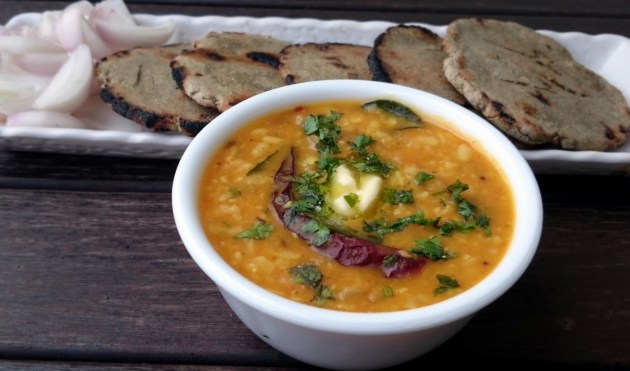
Dal maharani – I don’t know the reason for this name or origins of this dal but this is one of my favorite dals. Urad dal cooked with onion, tomato, and spices. This is an in house speciality at my home. Some dishes taste best when cooked by certain people and this is surely one of them. My aunt’s signature dish which I relish with hot parathas or bajra rotis.

Dal Maharani

A very simple dal but with a difference. It does not need any trips to the grocery store but yet will pack a punch on those cold rainy nights. I enjoy this mostly on its own with a dollop of ghee.  Bajra roti or parathas are the perfect companions for this nutritious treat.
Dal Maharani

Ingredients

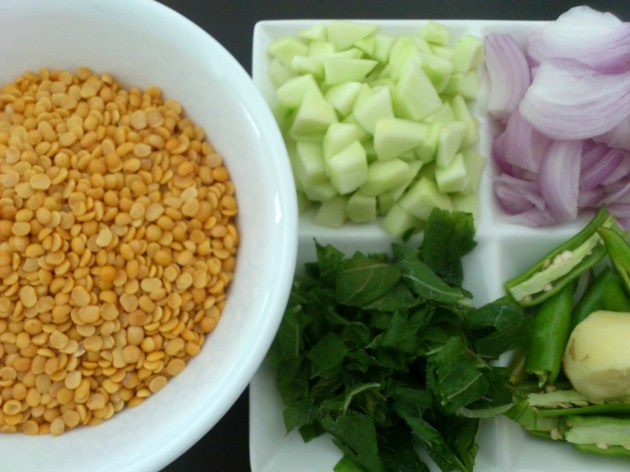
  • 2/3 cup urad dal soaked in plenty of water for 3 hours
  • 2 inch piece of ginger
  • 4 cloves of garlic
  • 3 green chillies
  • 2 tbsp oil/butter
  • ¼ tsp tsp mustard seeds
  • ¼ tsp cumin seeds
  • 10-12 curry leaves
  • 2 dry red chillies
  • 1 big onion finely chopped
  • 1 big tomato finely chopped
  • ¼ tsp turmeric
  • 1tsp red chilli powder
  • ½ tsp garam masala

Recipe

Wash and soak the urad dal in plenty of water for 3 hours. Drain the water and put dal in a pressure cooker.  Add 2 cups of water and some salt and cook for two whistles or until it is cooked. The dal is cooked when it gets mushy when you mix it. Keep it aside.

Grind ginger, garlic, and green chillies coarsely.

Heat 2 tbsp butter/oil in a kadhai or a thick bottomed pan. Add mustard and cumin seeds. Once the seeds pop, add curry leaves, and dry red chillies. Add the ginger, garlic and green chilli paste and onions. Saute and cook for 1-2 minutes. Add chopped tomatoes and little salt, red chilli powder, turmeric, and garam masala and mix well. Cook till oil separates and tomatoes are mushy. Add the cooked dal and mix well. Taste and adjust salt. Cook on slow gas for 7-10 minutes mixing in between. Serve hot with a dollop of butter and a squeeze of fresh lime.
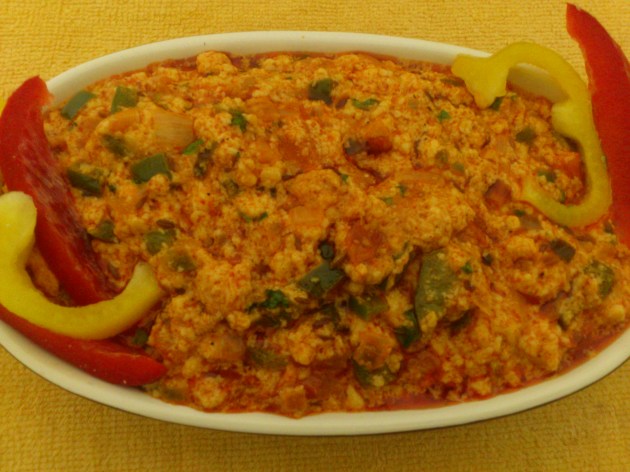
Paneer Bhurji (Cottage Cheese Scramble)

Paneer Bhurji (Cottage Cheese Scramble)

Paneer or Indian cottage cheese is one of the most popular cooking ingredients in northern part of India. It is made by curdling fresh milk. Taste of any good paneer recipe is directly proportional to the freshness of paneer. There are a variety of frozen paneer cubes/slabs available at the super markets. To make paneer at home, please refer to my post on homemade paneer.

As kids, eating paneer was a luxury. We used to get to eat paneer sabji whenever milk curdled at home or if it was a festival or celebration. When I moved to Bangalore, I was pleasantly surprised to see fresh paneer being sold at the supermarket nearby. Namdharis and Karthik’s sweet shop are probably the best places in Indiranagar to buy fresh paneer.

Now in Singapore, I was even more surprised to find variety of frozen paneer from its homeland Punjab. Mustafa centre stocks a variety of paneer (slab, pieces, & fried). I just lapped up some frozen paneer from Mustafa and tried this quick recipe and it did taste just like it used to taste with fresh paneer in Bangalore.

Paneer Bhurji (Cottage Cheese Scramble)

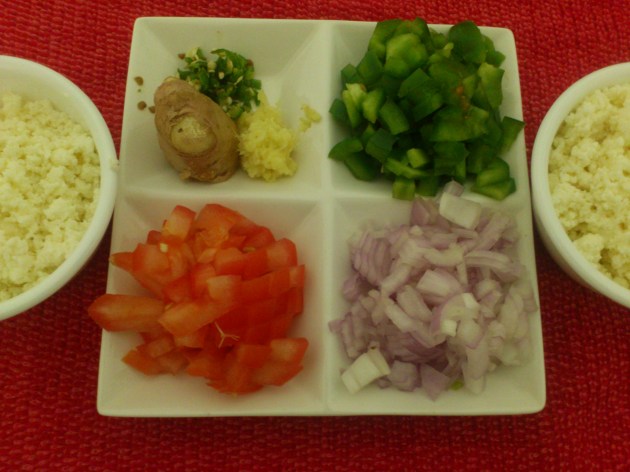
Ingredients

  • 1 cup fresh paneer crumbled
  • 2 tbsp oil (you can use butter if you like a calorie rich version)
  • ½ tsp cumin seeds (jeera)
  • 2 inch piece of ginger grated
  • 2 green chillies finely chopped
  • 1 small onion finely chopped
  • 1/2 capsicum finely chopped
  • 1/2 tomato finely chopped
  • 1 ½ tsp red chilli powder
  • ¼ cup milk
  • ½ tsp of garam masala
  • 1 tbsp of fresh coriander leaves finely chopped
  • Salt to taste

Recipe

Heat oil in a thick bottomed pan.

Add jeera and let it crackle. Add ginger and green chillies. Once the chillies are slightly browned, add onions and let them brown a little.

Add capsicum and sauté for about 1 minute; add tomatoes and let them cook till oil separates and tomatoes are mashed when you mix them. Add salt and red chilli powder and cook for a minute.

Now add the crumbled paneer and milk. Milk helps the paneer absorb the spices and makes the bhurji soft. If you find the bhurji dry, you can add couple of more tablespoons of milk. Mix everything and cook for 3-4 minutes. Finally add the garam masala and finely chopped coriander just before switching off the gas.

You can serve paneer bhurji with hot naan, rotis, parathas, or add it as a filling to sandwiches, wraps, or dosa.

Dudhi Methi na Muthiya (Steamed Bottle gourd and Fenugreek Dumplings)

Dudhi Methi na Muthiya (Steamed Bottle gourd and Fenugreek Dumplings)

One of my most favorite Gujarati meal/snack. I call it Gujarati Manchurian. It is an anytime meal for me. I make it for dinner and eat it steamed. Then save the left over muthia and temper it the next morning for breakfast. This is a great tea time snack too.

It is tasty, healthy, and packs in all the health benefits of whole wheat flour, millet (bajra) flour, fenugreek (methi), and bottle gourd (dudhi/lauki). All these ingredients make this a perfect diet snack/meal. Though muthias are tempered after steaming, you can either use less oil for tempering or simply eat them without tempering. They taste equally good.

I prefer to temper them with less oil. It makes the muthia soft and fluffy inside and crispy on the outside.

This is a family recipe again. As any other Gujarati dish, traditionally this too has sugar in it. But my mother in law make this without sugar and I love this version.

I enjoy it with garlic chutney, oil, onions, and some curd. Couple of points to keep in mind while making muthia:

Lauki has high water content so be careful while adding water. Add water only if you find the dough too dry to bind.

You can use left over rice instead of poha. I add poha as it makes the muthia softer compared to rice.

Dudhi Methi na Muthiya (Steamed Bottle gourd and Fenugreek Dumplings)

Ingredients

  • 1 cup millet(bajra) flour
  • 2/3 cup whole wheat flour
  • ½ cup gram flour (besan)
  •  ½ cup beaten rice (poha)
  • 1 cup fenugreek (methi) leaves chopped
  • 1 cup bottlegourd (lauki/dudhi) grated
  • 2 tbsp oil
  • 3 inch piece of ginger
  • 6-7 pods of garlic
  • 3 green chillies
  • ¼ tsp soda
  • ½ tsp turmeric
  • 2 tsp red chilli powder
  • 3 tsp coriander powder
  • Little water
  • Salt to taste

Tempering

  • 3 dry red chillies
  • ¼ tsp mustard seeds
  • 2 tbsp ginger, garlic, and green chilli paste
  • 10-15 curry leaves (kadi patta)
  • 2 tbsp sesame (til) seeds
  • 3 tbsp oil

Recipe

Make a coarse paste of ginger, garlic and green chillies. Take a wide bowl/dish combine rest of the things except water. Add very little water at a time and make a dough soft enough to just bind the ingredients together. Do not knead it a lot.

Apply little oil to your palms. Take some dough in your palm and fold your hand to make a fist. This is how you shape muthias (guess this is how it was named since you close it in a mutthi(fist) to make). Make similar rolls with rest of the dough.

Arrange the rolls on a greased sieve and steam them in a steamer for 25-30 mins on a low flame.

Remove and cool slightly. Cut each roll into 2-3 pieces.

Heat oil in a thick and deep pan (kadhai). Add mustard seeds and let them pop. Add curry leaves and dry red chillies. Add ginger, garlic, and green chilli paste and sauté for a minute. Add sesame seeds and sauté for few seconds. Add muthia pieces and mix well. Sauté for 2-3 mins till they start getting little crisp or brown.

Serve with garlic chutney, curd, and onions.

You can eat the muthia without tempering too.  Just dip them in garlic chutney mixed in some yogurt or oil.


Baigan ka Bharta (Ringna no Orro)

Baigan ka Bharta (Ringna no Orro)

Ringna no Orro or Baigan ka bharta gujju style. This is my mom in law’s world famous recipe. Everyone who has eaten this version of the bharta is a fan of her cooking. This is a very common recipe in Gujarat and people relish this with hot rotla (bajra ki roti). This is an almost no cook dish.

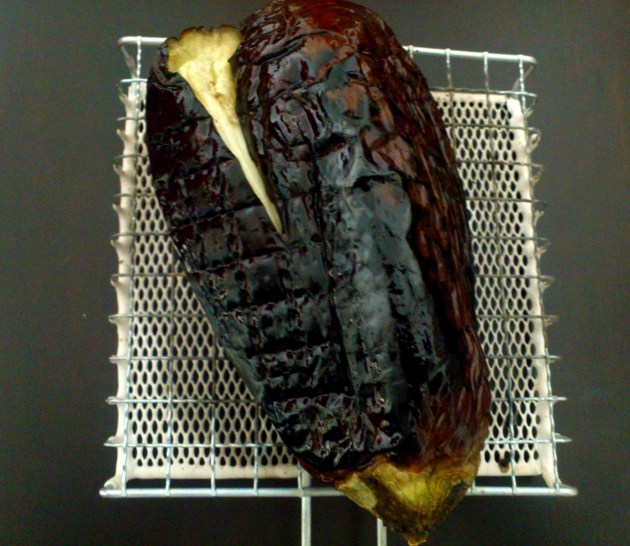
All you need is a big and beautiful looking Brinjal/Aubergine/Eggplant. Only cooking you will need for this dish is roasting the Brinjal on open flame. You can also grill it if you like.

Though Brinjal tops the list of vegetables I hate, I loved the smell of this one. Finely chopped onions and green chillies mixed with freshly roasted Brinjals never smelled so good to me. This cooks pretty fast and packs in lots of nutrition with very less fat.

My in laws and most of the bharta lovers enjoy this one with hot bajra roti (called Rotlo in gujarati), garlic chutney, and pieces of Jaggery. You can try this with normal whole wheat rotis too.

Baigan ka Bharta (Ringna no Orro)

Ingredients

Serves 2

  • 1 big Brinjal (Aubergine/Eggplant, Baigan, Ringana)
  • 1 onion finely chopped
  • 1 green chilli finely chopped
  • 2 tbp fresh coriander finely chopped
  • 1 tsp red chilli powder
  • 1 tbsp + ¼ tsp oil
  • Salt to taste

Recipe

Brush the aubergine with ¼ tsp oil and make a vertical slit. Roast on cooktop, or grill in oven grill or barbeque grill. Keep turning it periodically till the Brinjal is charred on all side. Let it cool completely and then peel off and discard the charred skin and the green top. Chop the Brinjal as finely as possible. You can even mash it if you prefer.

In a bowl, combine the chopped Brinjal with rest of the ingredients and mix well. Serve with hot Bajra roti, Garlic chutney and some pieces of Jaggery.

Missi Roti

Missi Roti

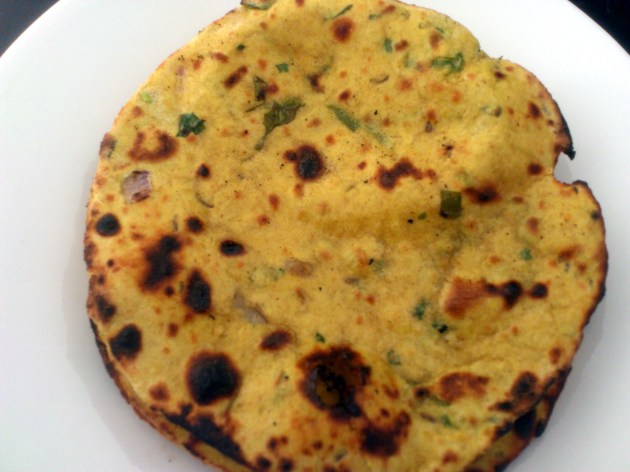
Missi roti is a north Indian flatbread made with whole wheat flour and gram flour. It is my mom’s favourite. This is healthier and tasty compared to the naan or normal tandoori roti. You can substitute the whole wheat flour with the multigrain aata which is readily available these days. If you want it even healthier, you can cook it like tandoori roti and leave out the ghee. I like it more than the normal naan roti.

Fresh coriander and green chillies add aroma and taste of the roti. You can add the green chillies as per taste if you want your roti spicier. Some people even use the left over dal to make the dough. You can even add fresh greens like spinach or fenugreek if you want it healthier.

Traditionally missi roti is cooked like a paratha using ghee on both sides. But I like it healthier so I cook it like phulka. Cooking both sides on griddle and then cooking it on open flame adds to the taste. Roll it out thicker than rotis and they will turn out softer. This is an all season all meal compatible roti. You can have it for lunch or dinner and this tastes best with dal and curries with gravies.

Missi Roti

Ingredients

Makes 4-5

  • 1 cup whole wheat flour (the multi grain aata available these days work perfect too)
  • ¼ cup gram flour (besan)
  • 2 green chillies finely chopped
  • ¼ tsp turmeric powder
  • 1 onion chopped
  • 2 tbsp chopped coriander
  • ¼ tsp carom seeds (ajwain)
  • ¼ tsp cumin seeds (jeera)
  • Salt to taste
  • 1 tsp ghee + 4 tsp ghee to drizzle on rotis

Recipe

Mix the flour, gram flour, chillies, turmeric, onion, coriander, carom seeds, cumin seeds, salt, and 1 tsp ghee with enough water to make a soft dough. Cover the dough and keep it aside for 15 minutes.

Knead the dough a little and divide it into equal portions (4-5). Roll out each portion slightly thicker than normal rotis and cook on hot griddle just like the normal phulka. Drizzle about a tea spoon of ghee and brush it evenly on the roti. You can cook it like a paratha too but I prefer the one that is cooked like roti. Serve hot with dal or sabji.


Palakoora Pappu (Spicy Yellow Lentils with Spinach)

Palakoora Pappu (Spicy Yellow Lentils with Spinach)

For me Andhra meals is incomplete without Palakoora pappu. It is a spicy (sometimes not) preparation of lentils with spinach. Lentils and spinach are cooked with tamarind paste and green chillies and tempered with garlic and other spices. Hot rice, a dollop of ghee and lots of pappu and some pickle are sure combination to make you over eat.

Since it is the mango season and I love cooking with raw mango, this recipe includes raw mango instead of tamarind paste. The quantity of raw mango or even tamarind paste depends on the sourness of the mango/tamarind and taste as well. As with other recipes, it helps to soak the dal for 15-20 minutes before cooking. Of course, there are hundreds of recipes for pappu and this is my version of the healthy south Indian dal. I can’t say it is authentic or traditional but this is how I make it and it is a hit with my siblings and friends.

Crushing the garlic and tearing and lightly crushing the fresh curry leaves between your palms just before adding them to hot oil will add a lot more to the flavour. Some people add tomatoes and onions also to the tempering. You can taste the cooked dal and add more green chillies to the tempering if the pappu is not spicy enough. This tastes best with plain rice and a dollop of ghee.

Palakoora Pappu (Spicy Yellow Lentils with Spinach)

Ingredients

Serves 2-3

For Pappu

  • 1 cup split pigeon peas (toor dal) washed and soaked for 15-20 mins
  • 1 onion chopped
  • 2 inch piece of ginger grated
  • 4 green chillies slit
  • ½ cup spinach chopped
  • 1 raw mango chopped (substitute with 4-5 tbsp tamarind pulp if not using raw mango)
  • 2 ½ cup water
  • Salt to taste

For the Tadka

  • 2 tbsp oil
  • 10-12 garlic cloves crushed
  • 2-3 dry red chillies
  • ½ tsp mustard seeds
  • ½ tsp turmeric powder
  • 10-15 fresh curry leaves
  • ¼ tsp asafoetida

Recipe

Put all the ingredients for dal in a pressure cooker and cook for 3-4 whistles or till the dal is cooked enough to be mashed with back of a spoon.

Heat oil in a kadhai or a heavy bottomed pan. Add the mustard seeds. Once the seeds pop, add curry leaves and dry red chillies and sauté. Add crushed garlic and cook for one minute. Add turmeric and asafoetida and cook for 20-30 seconds. Pour this hot tempering over the cooked dal and mix well. Cook the dal without lid on slow flame for 3-4 minutes. You can add little water, if the consistency is too thick.

Serve with hot rice and pickle.

Szechwan Rice

Schezwan Rice

Szechwan cuisine is known for its liberal use of garlic and spices and what more do we Indians need to like Chinese cuisine or any other cuisine for that matter :-).  Indian streets are dotted with number of Chinese street food stalls. They sell all kinds of spicy and colorful Indian Chinese dishes (it’s kind of new cuisine now). Szechwan rice is the Indianized spicy version of the Szechwan rice.


Again, there are different versions of this recipe. You can add celery, spring onion, Sichuan peppers too. Some people add ajinomoto (MSG) to get that “Chinese food taste”, but I prefer it without the MSG. You can also add a little orange color for that street food look. As the dish is cooked on high heat throughout, chop the vegetables very fine so that the vegetables are cooked well. Cooking on high heat also adds a smoky flavor to the dish.

This is one of the best recipes that my aunt makes. She always prepares the sauce in advance and whips up this spicy dish every time we crib about the dinner being too boring. You can prepare the sauce in advance and keep it in fridge in airtight container. Make sure the rice is not over cooked. you can also use the sauce for stir fries.

You can serve Szechwan rice with a sauce of your choice or it tastes good just by itself.

Szechwan Rice


Ingredients

Serves 2

  • 2 cups cooked rice
  • 10-12 dry red chillies (tops removed) soaked in hot water for 10 mins
  • 3 inch piece of ginger
  • 5-6 cloves garlic
  • ¼ cup chopped tomatoes
  • ½ cup onions finely chopped
  • ½ cup finely grated cabbage
  • ¼ cup beans finely chopped
  • ¼ cup carrots finely chopped
  • ¼ cup capsicum finely chopped
  • ¼ cup celery finely chopped
  • 2 tsp soy sauce
  • 2 tsp vinegar
  • 2 tbsp sesame oil/any other cooking oil
  • Salt to taste

Recipe

Szechwan Sauce

Grind tomato, ginger, garlic, and red chillies to a smooth paste.  Heat 1 tbsp oil in a thick bottomed pan. Add onions and cook for few minutes (1-2) till they are translucent and pink. Add cabbage and cook for 2-3 mins. Add the tomato chilli paste and mix well. Keep mixing it every 30-40 seconds. Cook till oil separates. Transfer this sauce to a bowl and keep aside.  This sauce can be used for stir fries too. Once it is completely cooled, you can store it in fridge for upto two weeks in an air tight container.

For rice

Heat 1 tbsp oil in a wok/kadhai.  Add finely chopped celery and sauté on high heat for 30-40 secs. Add carrots and beans and sauté for 1-2minutes on high heat. Add capsicum and sauté for 1 minute. Add salt and cook for 1-2 mins. Add the schezuan sauce and mix well. Add this gravy to the cooked rice. Mix well and serve hot.

Rajasthani Mirchibada

Rajasthani Mirchibada

Mirchi bada in Rajasthan or mirchi bhajji is South is a delicious street food made of thick and long green chillies dipped in gram flour and deep fried. It perfectly complements piping hot tea on a rainy day. For a very long time, this was our Sunday special snack along with other bhajiyas. In Rajasthan and at my home too, the mirchi bada is stuffed with a potato filling which is slightly sour and cuts the heat of chillies.

Mirchibada Stuffing


It is a good idea to deseed and boil the chillies for few minutes. It helps to reduce the heat in chillies. Remember not to make the batter too thin or it won’t stay on the chillies. Traditionally, roasted cashews and anardana are added to the filling but I like to add roasted peanuts and tamarind paste to add a sour kick to the spicy chilli. In south, it is slit open after frying and topped with finely chopped onions and masala peanuts. Whether you decide to serve it the south Indian or the north Indian style, remember to serve them hot. That is when they taste the best. This snack is best served hot along with mint or tamarind chutney.

Mirchibada

Ingredients

Makes 8-10 Mirchi Badas

  • 8-10 long green chillies (the less hot ones used for Mirchi bhajjis)
  • Finely chopped onion (optional topping)
  • Masala peanuts (optional topping)
  • Oil to fry

For the filling

  • 2 potatoes boiled and peeled
  • 3-4 tbsp groundnuts roasted and coarsely grounded
  • 1 green chilli finely chopped
  • ½ tsp red chilli powder
  • 2-3 pinches turmeric powder
  • ½ tsp anardana powder (can be swapped for ¼ tsp aamchur powder or ¼ tsp tamarind pulp)
  • Salt to taste

For the batter

  • ½ cup gram flour (besan)
  • 2 pinches turmeric
  • ¼ tsp red chilli powder
  • ¼ tsp carom seeds (ajwain)
  • Salt to taste
  • Chilled water (approximately ½ cup) to make batter

Recipe

Slit the chillies along their length to make a pocket for the masala. Deseed them and boil them in rolling hot water for 3-5 minutes. Drain and keep aside.

To prepare the filling, mix all the ingredients for the filling and mash them using hand or a potato masher. You can choose to add amchur or anardana powder instead of the tamarind paste. Idea is to add a hint of sourness to the filling. You can add all the spices as per taste to make the filling more or less spicy.

Take one boiled chilli at a time and fill it with the potato filling. Do not over fill the chillies. Keep them aside till you are ready to fry them.

For the batter, Mix the gram flour, turmeric, red chilli powder, carom seeds and salt. Add little water at a time to make a paste consistency batter. It should stick to the chillies when you dip them in water. It took me a little less than ½ cup of water to get the right consistency. Using ice cold water to make batter for bhajiyas helps them become crispier.

Heat oil in a kadhai. It should not be smoking hot. To check if the oil has reached correct temperature, just drop a tiny bit of batter in the oil. If it sizzles and floats immediately, the oil is hot enough to fry the chillies. Dip a potato filled chilli in the batter and ensure that it’s properly coated. Drop it carefully in hot oil and fry until golden. Fry few chillies at a time.  Drain them on an absorbent paper and serve hot with mint or tamarind chutney.


Sev Tamatar (Gujarati Tomato Curry)

Sev Tamatar (Gujarati Tomato Curry)

Here comes another Gujarati favorite curry. It is a perfect quick cook recipe. Like most of the Gujarati recipes, this one too is a combination of sweet, sour, and spicy.

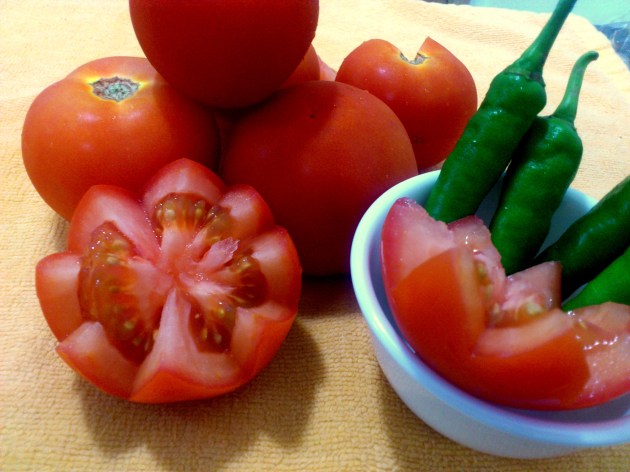
The ideal tomatoes for this curry would be the sour tomatoes (they are called nati tomatoes in Bangalore and desi tamatar in north). I have used the roundest available tomatoes in Singapore and the curry still turned out well.

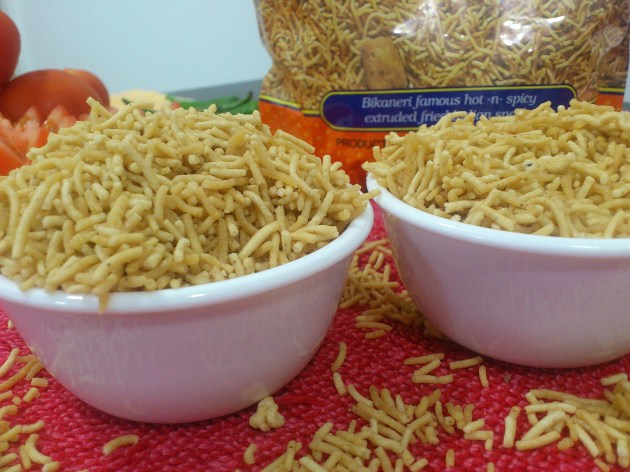
The crisp sev is a perfect complement to the succulent tomatoes. I prefer the spicy bhujiya sev available in the market. You can also use the non-spicy sev if you don’t like your food very spicy.

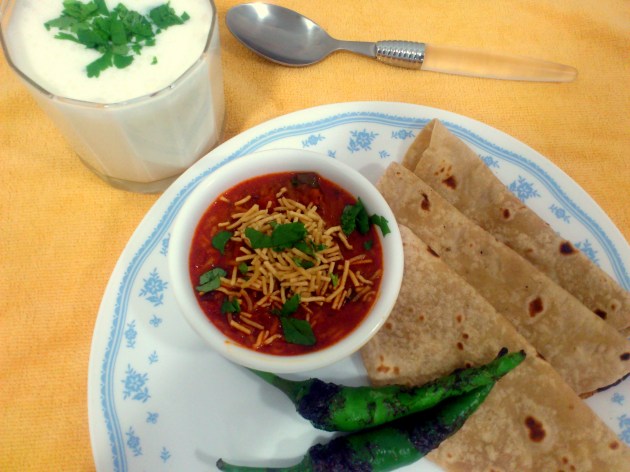
This crunchy curry can be enjoyed best with soft rotlis (chapati in Gujarati) and roasted Bhavnagri chillies* and a glass of chilled chaas (buttermilk) to wash the spice down. I do not prefer this as sweet as it is originally made. You can always adjust the sweet and spices as per taste.

*For roasted Bhavnagri chillies (you can use any other non-spicy chilli if you don’t get Bhavnagri chilli), just slit the chilli and line it with a pinch of salt and roast it on flame till you see black spots on the chilli.

Sev Tamatar (Gujarati Tomato Curry)

Ingredients

  • 2 tomatoes chopped
  • ½ cup sev
  • 3 tbsp groundnut oil
  • ¼ tsp mustard seeds
  • ¼ tsp cumin seeds (jeera)
  • 2 green chillies slit
  • 10-12 curry leaves
  • 2 inch ginger piece grated
  • ½  tsp asafoetida (heeng)
  • ½ tsp turmeric
  • ½ tsp chilli powder
  • 4 tbsp coriander powder
  • 2 tsp sugar
  • 2 tsp lime juice
  • ½ tsp garam masala
  • ½ cup water
  • 2 tbsp fresh coriander chopped
  • Salt to taste

Recipe

Heat oil in a thick bottomed deep pan (kadhai). Add mustard seeds and jeera and let them pop. Add curry leaves, green chillies, and ginger and sauté.

Add asafoetida, turmeric, chilli powder, and coriander powder and sauté and immediately add chopped tomatoes and cover for 10-15 seconds.

Uncover and add salt, sugar, lime juice, garam masala and water and mix well.

Let it cook for 3-5 mins till you see oil on top. Just before serving add chopped coriander and sev. Mix well and serve with hot rotlis.

Gatte ki Sabji (Gram flour Dumplings in Yogurt Sauce)

Gatte ki Sabji (Gram flour Dumplings in Yogurt Sauce)

Gatte ki sabji is one of the most popular dishes of Rajasthani cuisine. There is hardly any marwadi family that doesn’t make this curry. Since the climate in Rajasthan is very hot and dry, fresh vegetables are not available around the year. Many Rajasthani recipes depend on dry ingredients like different types of flours, millet, and beans. Gram flour and buttermilk are the main ingredients of this curry.

Gatte are basically cylindrical rolls of gram flour and other spices mixed into a dough and cooked in boiling water. These can be used for making a dry curry or a sauce-based curry like this one.

Apart from the sabji that is made at my home, I have enjoyed this curry the most at Rajdhani in Bangalore. Their saatpadi and gatta are to die for. I like to eat this with rice or hot puris. There is also a dry version of this curry which I will post some other time. For now, enjoy this mildly spicy and tangy curry. Happy eating!

Gatte ki Sabji (Gram flour Dumplings in Yogurt Sauce)

Ingredients

For kadhi

  • 2 cups buttermilk
  • 1 tbsp gram flour (besan)
  • ¼ tsp turmeric powder
  • 2 tsp red chilli powder
  • ¼ tsp asafoetida (heeng)
  • 8-10 curry leaves
  • 2 green chillies slit
  • 4 inch piece of ginger grated
  • 2 tsp coriander
  • ¼ tsp cumin seeds
  • ¼ tsp mustard seeds
  • 2 tbsp oil
  • 4 cloves
  • Few fenugreek seeds
  • 2 dry red chillies
  • Salt to taste

For Gatte

  • ¾ cup besan
  • 1tsp red chilli powder
  • ¼ tsp turmeric powder
  • 1 tbsp oil
  • Few carom seeds
  • Salt to taste

Recipe

Combine all the ingredients for gatte and make a stiff dough adding little water. Divide the dough into equal portions and roll them into cylindrical rolls using your palms.

Boil plenty of water and cook gattas till they float on top. Drain and let them get cool. Cut the gattas into approximately 1 ½ inch pieces and keep aside.

Whisk together buttermilk, gram flour, turmeric powder, red chilli powder, asafoetida, and salt.

Heat oil in a kadhai or a thick bottomed pan. Add cumin seeds, mustard seeds, cloves, and fenugreek seeds. Once the seeds pop, add curry leaves, green chillies, grated ginger, and dry red chillies and sauté for few seconds.

Add the whisked buttermilk mixture and bring to boil while stirring continuously otherwise the kadhi will split. Once the kadhi boils add gattas, reduce the flame and cook for 2-3 minutes. Garnish with chopped fresh coriander and serve with rice or hot puris.

pinterest-7ac65>